


Polycrystalline Silicon
Anyang Jiashike Metal Co.,LTD,as the leading manufacturer of ferroalloy materials in China.It is a comprehensive enterprise integrating scientific research, processing and production, and import and export trade.
It has more than 20 years of experience in the professional field and uses advanced technology and professional equipment. , produces high-quality metals and alloys, and its business scope involves metallic silicon, ferrosilicon, silicon-calcium alloy, silicon-carbon alloy, natural graphite powder and other products.


Why Choose Us
Experienced
Have a good reputation with more than 20 years experience in ferroalloy.
Competitive Price
As a primary raw material supplier of ferroalloy, we can offer you more competitive prices.
Professional Team
There are two team to meet your requirement,our technology team working on innovate and improve products and our sales team working on provide the personalized situation and after-sale service.
Production equipment
Our company adopts advanced equipment and technology in production and has advanced production lines and equipment to efficiently produce high-quality ferroalloy products. We focus on product quality management and ensure that our products comply with international standards and customer requirements through strict quality control and testing processes.
Specification
|
Property |
Bulk Crystalline Silicon |
Polycrystalline Si |
|
Thin Film Density |
2.329 g/cm3 |
2.3 g/cm3 |
|
Thermal Coefficient of Expansion |
2.6 µm/(m·K) (at 25°C) |
2 µm/(m·K) (at 25°C) |
|
Temperature Coefficient of Resistance |
-70 x 10-3 /°C |
1 x 10⁻³ /°C |
|
Intrinsic Stress |
N/A |
Compressive: 1-5 x 10⁹ dynes/cm3 |
Polycrystalline Silicon Properties (Theoretical)
|
Molecular Weight |
28.08 |
|
Appearance |
Silvery |
|
Melting Point |
1414 °C |
|
Boiling Point |
2900 °C |
|
Density |
2330 kg/m3 |
|
Solubility in H2O |
N/A |
|
Poisson's Ratio |
0.064 - 0.28 |
|
Young's Modulus |
51-80 GPa |
|
Vickers Hardness |
N/A |
|
Tensile Strength |
N/A |
|
Thermal Conductivity |
1.49 W/cm/K @ 298.2 K |
|
Thermal Expansion |
(25 °C) 2.6 µm·m-1·K-1 |
|
Electrical Resistivity |
3-4 microhm-cm @ 0 °C |
|
Electronegativity |
1.8 Paulings |
|
Specific Heat |
0.168 Cal/g/K @ 25 °C |
|
Heat of Fusion |
9.47 Cal/gm mole |
|
Heat of Vaporization |
40.6 K-Cal/gm atom at 2355 °C |
Advantages of Polycrystalline Silicon
Durable and reliable
Polycrystalline silicon—bringing excellent qualities and reliability so it can keep achieving stable performance, even in the harshest of environments. Be it high or chilled temperatures, polycrystalline silicon very well adapts to such conditions. Such a property is very useful in the case of long-running equipment like solar cells and industrial sensors.
Cost-effective production
It's all about polycrystalline silicon being a high-tech material that is not quite expensive to produce owing to the huge amounts of its raw materials and wide-ranging production processes. While silica sand forms the bulk of the raw materials for polycrystalline silicon, it is in plenty among the world's materials, thus ensuring a steady supply for the long term.
Enhances efficiency
The efficiency of numerous devices and technologies is enhanced substantially by polycrystalline silicon. In the solar industry, for instance, high-quality polycrystalline silicon materials can significantly increase the photoelectric conversion rate of solar cells, enabling solar panels to produce more electricity of similar size compared to others. This high-efficiency characteristic greatly increases the economic and practical viability of solar power generation.
Environmentally friendly
Polycrystalline silicon is much more than a green material. It has various degrees of compatibility with the environment in which it is applied. The first raw material, silica sand, is an almost entirely renewable resource and has a very low impact on the natural environment when extracted. Comparatively, therefore, production from polycrystalline silicon turns out to be relatively sustainable and reduces reliance on scarcity.
Applications areas of polycrystalline silicon
Solar panel manufacturing: Polysilicon is one of the key materials for solar panel manufacturing. By melting silicon ore, forming silicon rods and cutting them into thin sheets, solar panels can be prepared to convert sunlight into electricity for use in solar power systems.
Semiconductor chip manufacturing: Polysilicon is one of the main materials used in the manufacture of integrated circuit chips. By using polysilicon in the silicon wafer manufacturing process, a variety of materials can be deposited on the surface to form circuit elements such as transistors, capacitors and resistors. These chips are the core components of modern electronic products and are widely used in devices such as computers, cell phones, tablets, and televisions.
Photovoltaic materials: Polysilicon can be used to make other types of photovoltaic materials, such as solar absorbing layers and transparent conductive layers. These materials absorb sunlight and generate electricity, which is used in solar panels and other photovoltaic devices.
Medical: Polysilicon also has important applications in the medical field, where it can be used to manufacture medical devices and equipment such as artificial joints, artificial heart valves and implantable medical sensors. Polysilicon has excellent biocompatibility and mechanical properties, making it one of the ideal materials for medical device manufacturing.
Environmental engineering: Polysilicon can be used to manufacture gas sensors for detecting and monitoring air quality, water quality and environmental pollutants. Its high sensitivity and fast response time make it one of the ideal materials for environmental monitoring.
Optics and fiber optic communications: Polysilicon has the characteristics of low attenuation and high optical transparency, so it is commonly used in the manufacture of optical lenses, fiber optic cables and fiber optic connectors and other optical and fiber optic communications equipment.
Types of Polycrystalline Silicon
Classification by form
- Massive silica: The morphology is similar to rock, the size ranges from a few centimeters to tens of centimeters, the quality is relatively stable, and it is easy to store for a long time. According to the smoothness of the surface, massive silicon can be divided into three types: Dense material, cauliflower material and coral material. Dense material is smooth in appearance, the surface particles of the degree of depression is usually less than 5mm, does not contain oxidized interlayer, the highest price, mainly used for pulling monocrystalline silicon. Cauliflower material surface is slightly rough, the degree of depression of the particles between 5 and 20 mm, the price of mid-range. Coral material surface depression depth of more than 20 mm, the lowest price.
- Pelletized silicon: In granular form, about 2 mm in diameter, with a large surface area, susceptible to contamination, and usually vacuum-packed. Granular silicon is susceptible to contamination during transportation and processing, but has advantages in certain applications.


Categorized by purity
- Metallurgical grade polysilicon (mg-si): Purity between 99.999% and 99.9999% (i.e., 5n to 6n grades), mainly used in construction, textile, automotive and machinery.
- solar grade polysilicon (sog-si): Purity between 99.9999% and 99.9999999% (i.e., 6n to 9n), mainly used in the production of photovoltaic (pv) crystalline silicon cells, where the improvement of purity is essential to enhance the conversion efficiency of pv cells. The improvement of purity is crucial to enhance the conversion efficiency of photovoltaic cells.
- Electronic grade polysilicon (seg-si): Purity above 9n, mainly used in the manufacture of silicon polished wafers, solar cells and high-purity silicon products. Electronic grade polysilicon has higher requirements for power electronics applications, with a purity of 11n or more.
Packing & Delivery
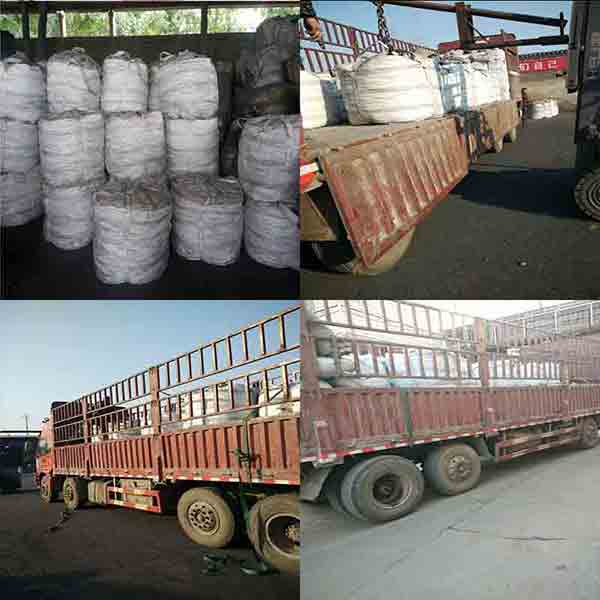
As one of the most professional polycrystalline silicon manufacturers and suppliers in China, we're featured by quality products and low price. Please rest assured to buy polycrystalline silicon in stock here from our factory. For customized service, contact us now.
Ferro Silicon, Si Ca Alloy, Magnesium Ingot