How much silica fume should be added to cement?
Jun 03, 2024
Leave a message
The amount of microsilica fume added to cement is generally 5-10%.
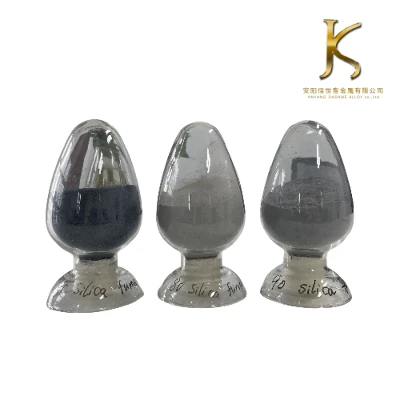
Microsilica fume, also known as silica fume, is an ultrafine powder produced during the smelting of ferrosilicon and industrial silicon. It has high specific surface area and activity, which can effectively improve the properties of cement or concrete. Adding microsilica fume to cement can significantly improve the strength, density, impermeability, frost resistance and early strength of concrete. It can also improve the abrasion resistance and cavitation erosion resistance of concrete.
Research shows that when the amount of microsilica fume is added to 5-10%, the compressive strength of concrete can be increased by 10-50%, the flexural strength can be increased by more than 10%, the impermeability can be increased by 5-8 times, and the carbonation resistance can be increased Improved by more than 4 times. In addition, the relative dynamic elastic modulus of concrete mixed with 10% microsilica fume decreases by 1-2% after 300-500 freeze-thaw cycles, while the relative dynamic elastic modulus of ordinary concrete decreases after 25-50 cycles. It has been reduced by 36-73%, showing the significant effect of microsilica fume on improving the durability of concrete.
In actual applications, the amount of microsilica fume incorporated will vary according to the specific purpose of use and the performance requirements of the concrete. For example, for high-performance concrete, hydraulic concrete, shotcrete, etc., the recommended mixing amount is 5-10%. In some specific applications, such as when used as a pump aid, the blending amount can be reduced to about 2%. The final blending amount needs to be determined through mix ratio testing to ensure the best economic and performance results.